Street Fighter IV Champion Edition
Popular Games
Last Played
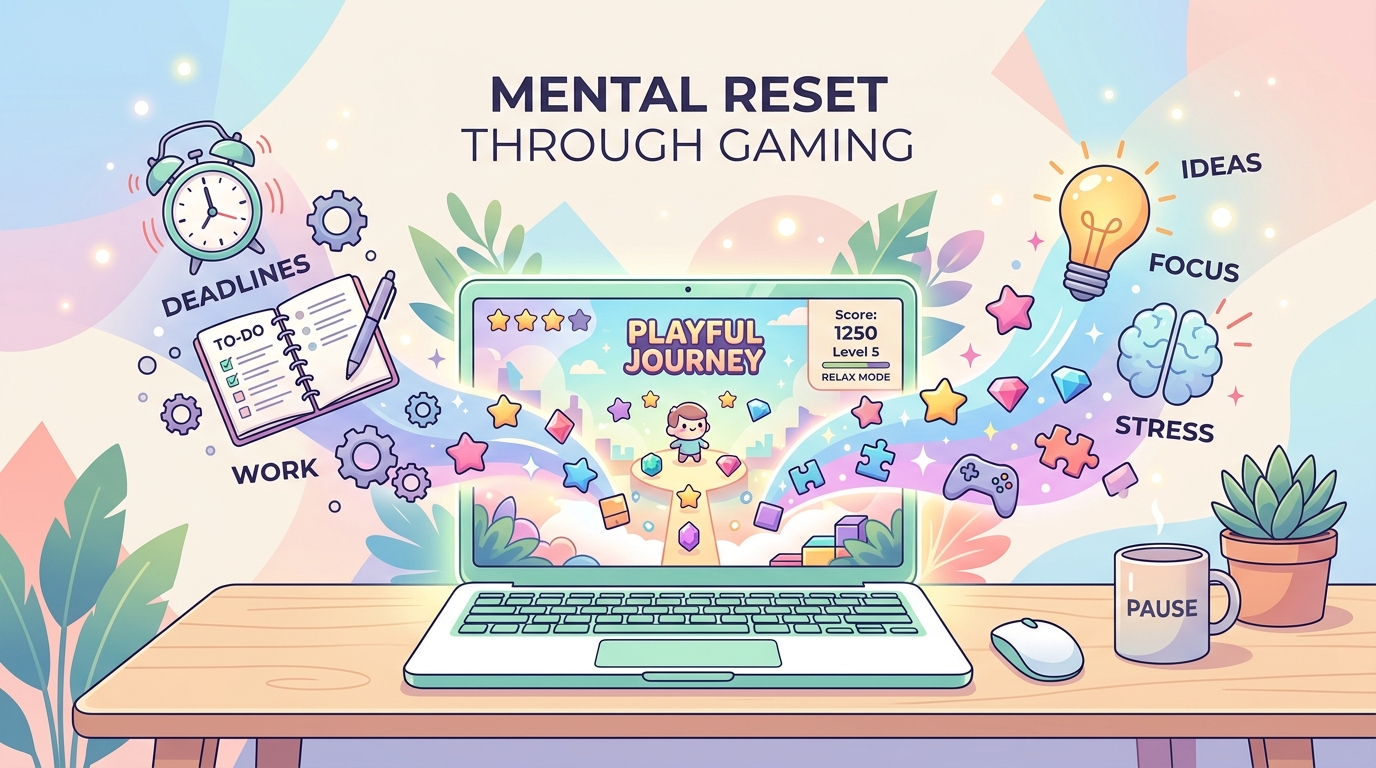
It's easy to assume that any break from work is a distraction from getting things done. But the relationship between focus and rest is more nuanced than that — and a well-timed short break, including a quick game, can genuinely support concentration rather than undermine it.
Sustained focus isn't infinite — most people's attention naturally dips after a period of concentrated work, regardless of motivation or willpower. This is part of why techniques like scheduled short breaks (the well-known "Pomodoro" method being one popular example) have become common productivity advice: stepping away briefly, then returning, tends to work better than pushing through fatigue for hours at a stretch.
The key word is "brief." A break that's too long or too immersive can make it harder to return to the task at hand — which is exactly why the type of break matters, not just the fact of taking one.
A short, simple game hits a useful middle ground: it's engaging enough to genuinely shift your attention away from work (unlike passively scrolling, which doesn't always feel restful), but short and self-contained enough that it doesn't demand a long, open-ended time commitment the way a TV episode or a longer game might.
Puzzle games and hypercasual games in particular tend to work well for this — short rounds, clear stopping points, and low pressure to "keep going" once a round ends.
The same qualities that make a short game satisfying can also make it easy to lose track of time. A useful approach is deciding on your break length before you start — one round, or a set number of minutes — rather than deciding in the moment when to stop.
If you're due for a short mental reset, our Puzzle Games and Hypercasual Games collections are built for exactly this — quick to start, quick to finish, and free to play right in your browser.